
 Español
 Русский


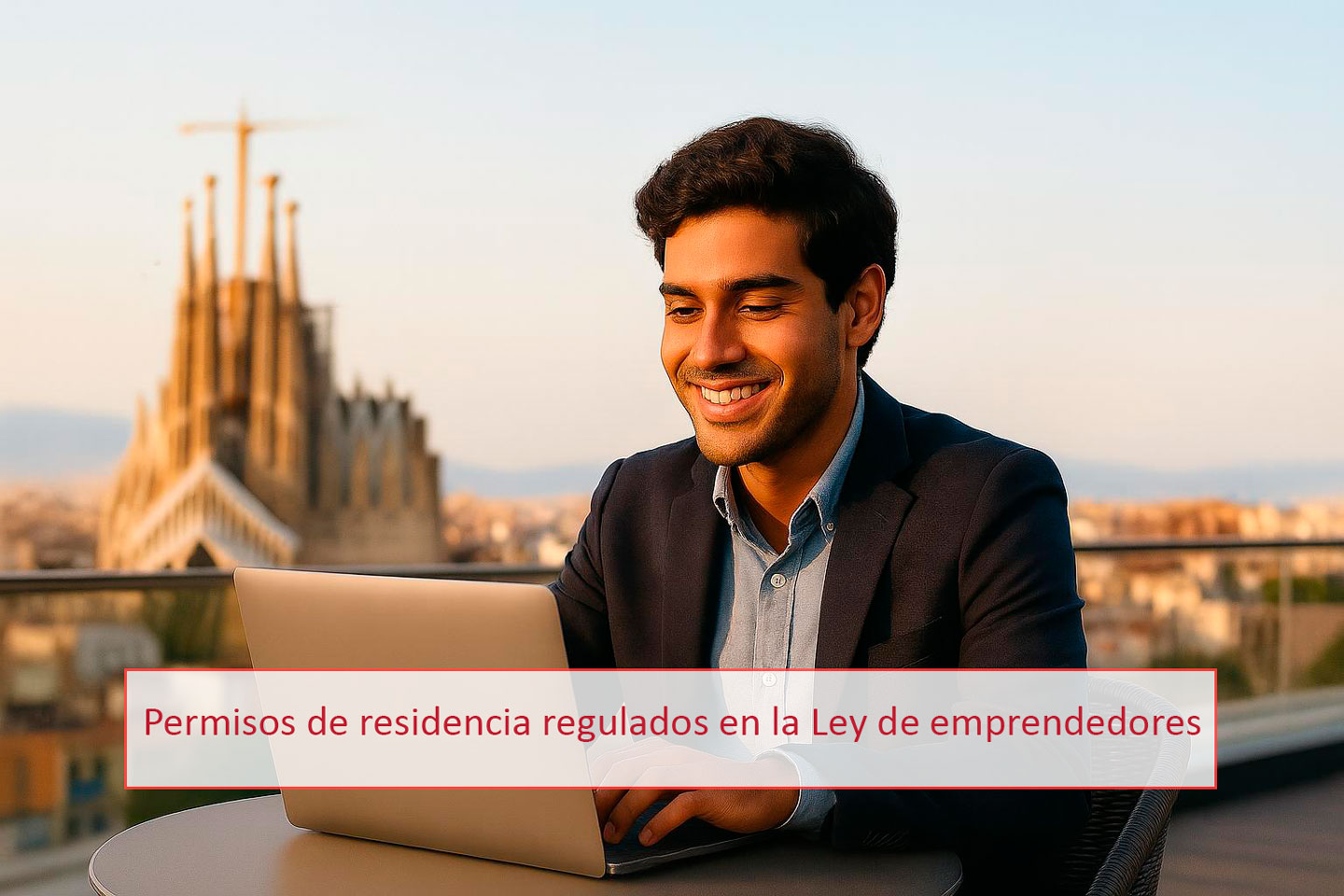
Law 14/2013, on support for entrepreneurs and their internationalisation, introduced a specific legal framework to facilitate the residence and activity of investors, entrepreneurs, highly qualified professionals and other foreign profiles in Spain. Below, we address the most frequently asked questions about the different types of residence permits regulated in this regulation.
What is the objective of Law 14/2013 with respect to Immigration?
The purpose of the Entrepreneurs Law is to promote the attraction of talent and foreign investment in Spain, establishing a specific system of residence permits that is processed more quickly and flexibly than the general regime provided for in Organic Law 4/2000.
What types of permits does the Entrepreneurs’ Law contemplate?
The Law regulates different types of permits:
- Permit for entrepreneurs.
- Permit for highly qualified professionals.
- Permission for researchers.
- Leave for workers who carry out an intra-company transfer.
- Permit for workers in productions in the audiovisual and cultural sector.
- Permit for international teleworkers.
- Leave for relatives of the above.
Who can apply for the permit for entrepreneurs?
It can be applied for by non-EU citizens who wish to start an innovative business project with economic interest and who meet the age, legality, financing, project and insurance requirements for Spain.
It will be necessary to maintain the conditions and compliance with the requirements that gave access to the visa or residence permit throughout its validity.
What permits are available for highly qualified professionals?
Highly qualified non-EU citizens with a university degree or equivalent experience, who have a qualified job offer in companies established in Spain, may apply for a specific residence permit for managerial, specialised technical or research positions.
What is intra-company transfer leave?
The intra-company transfer permit is a type of residence and work permit that allows a company to transfer a foreign worker from a headquarters located outside Spain to a headquarters in Spain, all within the same business group. Non-EU workers can apply to work as a Manager, Specialist or Worker in training.
What does the permit for workers in audiovisual and cultural sector productions regulate?
This is a residence and work permit in Spain specifically aimed at non-EU foreign professionals who participate in artistic, technical or production activities related to the audiovisual, artistic and cultural fields.
What leave are international teleworkers eligible for?
International teleworkers who wish to legally reside in Spain while working remotely for foreign companies are eligible for a residence permit as an international teleworker, also known as a digital nomad visa.
And what about foreign researchers?
In Spain, non-EU foreign researchers hired by public or private research entities that collaborate with universities or technology centres can obtain a residence and work permit specifically designed for research, development and innovation activities.
Can family members be accompanied?
Yes. All the permits regulated in this Law allow family reunification, even simultaneously.
What is the duration of these permits?
- Residence visas: applied for from the country of origin or legal residence, the duration is one year or equal to the duration of the residence permit (if less). They allow you to reside without the need for a TIE[1].
- Residence permits: they are requested from Spain if the applicant is already in the country legally; the duration is 2 years, renewable for another 5 years.
How are these permits processed?
Through the Large Companies and Strategic Groups Unit (UGE-CE). The maximum resolution period is 20 working days as long as there is no requirement to interrupt this period, with positive administrative silence.
Can I work with these permits?
Yes, all permits allow you to work from the beginning, without additional procedures.
What advantages does this regime have over the general regime?
- Shorter term.
- It allows you to work directly.
- Simultaneous family reunification.
- Flexibility in the application.
- Positive administrative silence.
Conclusion
Law 14/2013, on support for entrepreneurs and their internationalisation, is a key tool for attracting and retaining qualified talent in Spain, by establishing an agile legal framework adapted to the demands of the global market through mechanisms such as the permit for entrepreneurs, the permit for highly qualified professionals and intra-company transfer.
Together, these measures not only facilitate the legal residence of foreign talent, but also position Spain as an attractive destination for investment, professional development and business internationalisation.
[1] TIE: Foreigner Identity Card (Tarjeta de Identidad de Extranjero)
